
Lucca to Bologna
Wednesday 10th June 2026.
We are on the move again. It was a 2 train day. First we caught a regional train from Lucca to Firenze (approx 90 mins) and then boarded an intercity train to Bologna. That journey was just 30 minutes, helped by speeds up to 300km per hour. If the Italian trains built in Torbanlea (Australia) run this fast it will cut the commute to Brisbane to 1/3 of the current time.
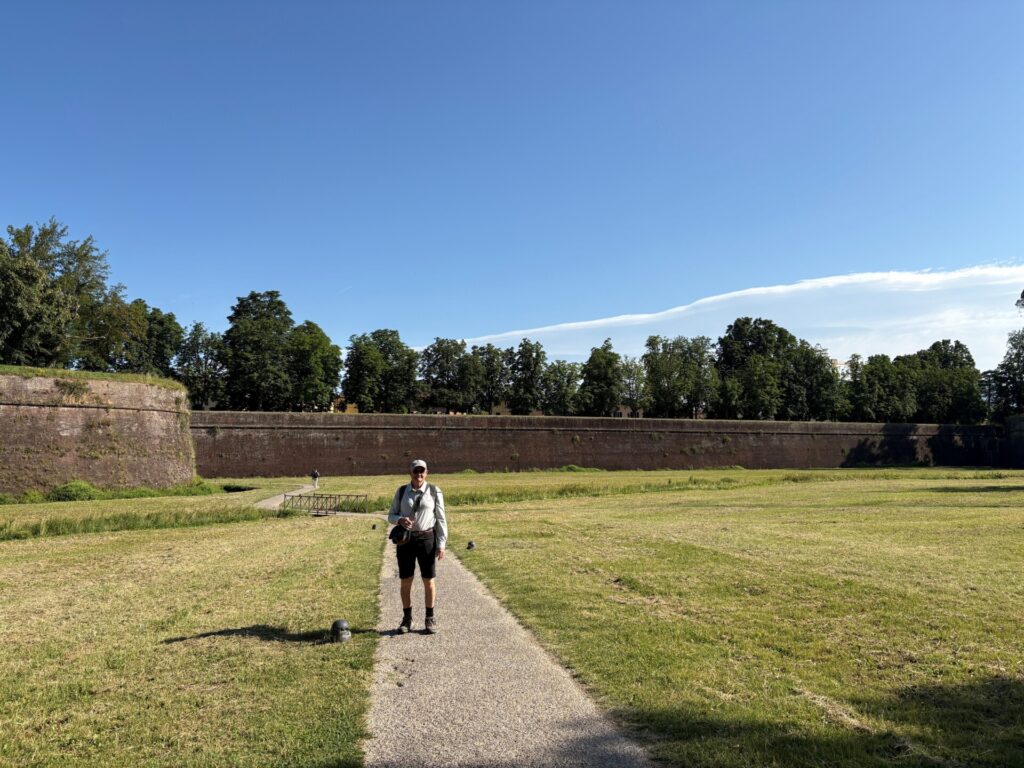
City walls of Lucca viewed from the outside
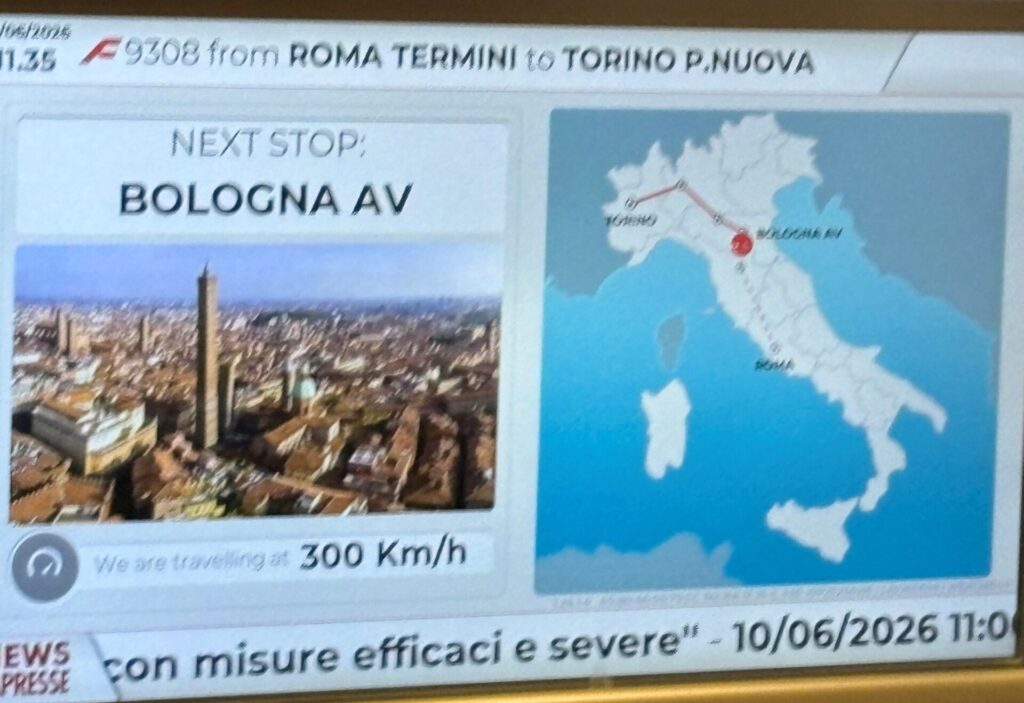
The train was travelling at speeds of 300 kms per hour – the fuzzy image is due to the speed
It was a short walk to our hotel accommodation in via Indipendenza. We are staying in the old city. It’s been 43 years since we were last here and all I can remember are the 2 leaning towers, At that time we climbed to the top for magnificent views of the city, but due to extensive works being constantly undertaken they are now closed.
After checking in it was time to do some exploring. We set off along via Indipendenza strolling through the porticos or arcades. They stretch for more than 40 kms in many directions. The concept of the porticos began more than 1000 years ago when, like a lot of cities, verandahs were added to provide extra living space. In the case of Bologna, this extra space was built atop the arcades on every level, thus providing much needed student accommodation (being a university city). Over time the municipality decreed all new houses, along the main streets, to be built with a portico that extended over the footpath. Later in the 1500’s the governor declared that all of the porticos had to be rebuilt in brick or stone.
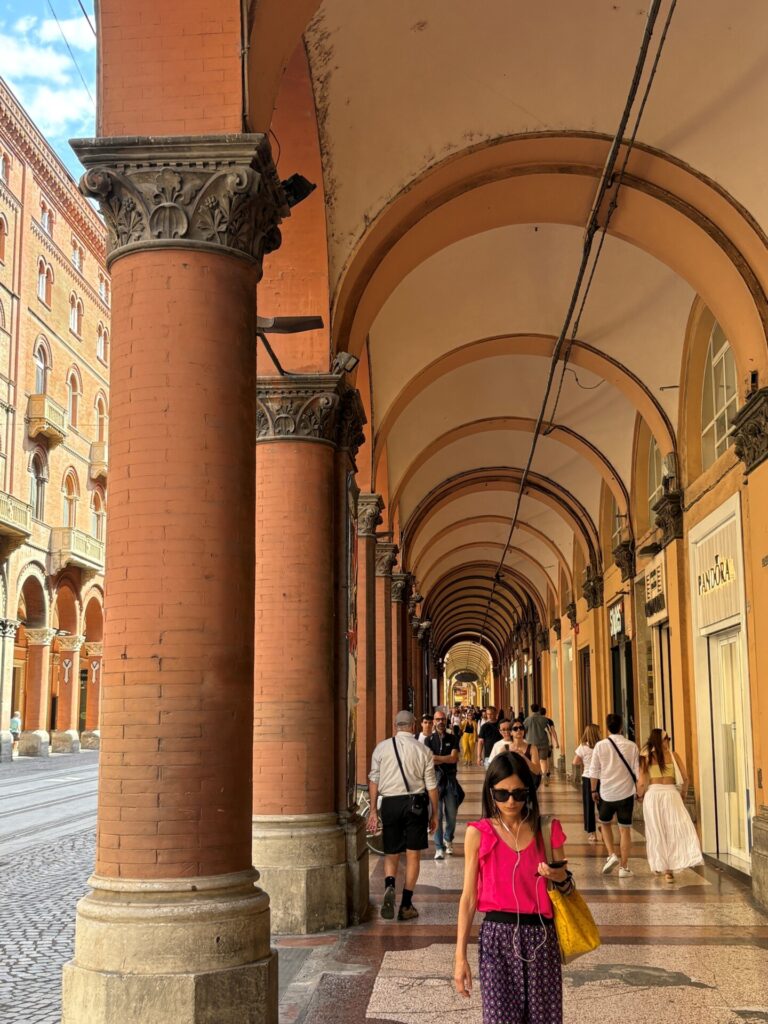
Porticos or arcades
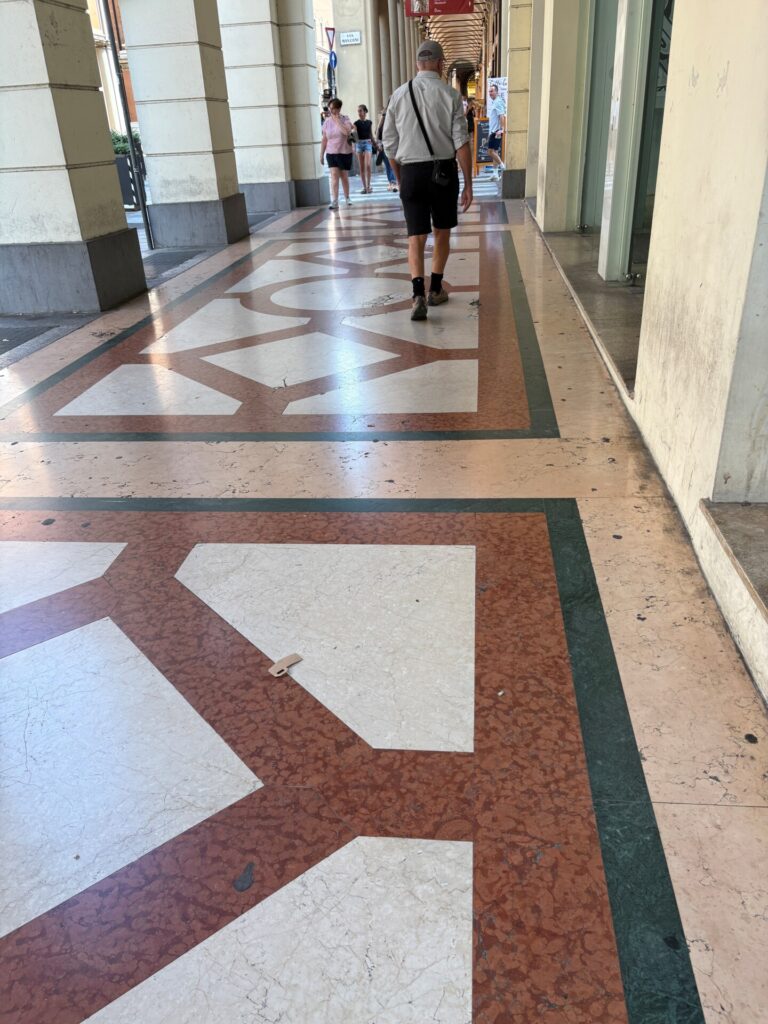
marble floors of the porticos
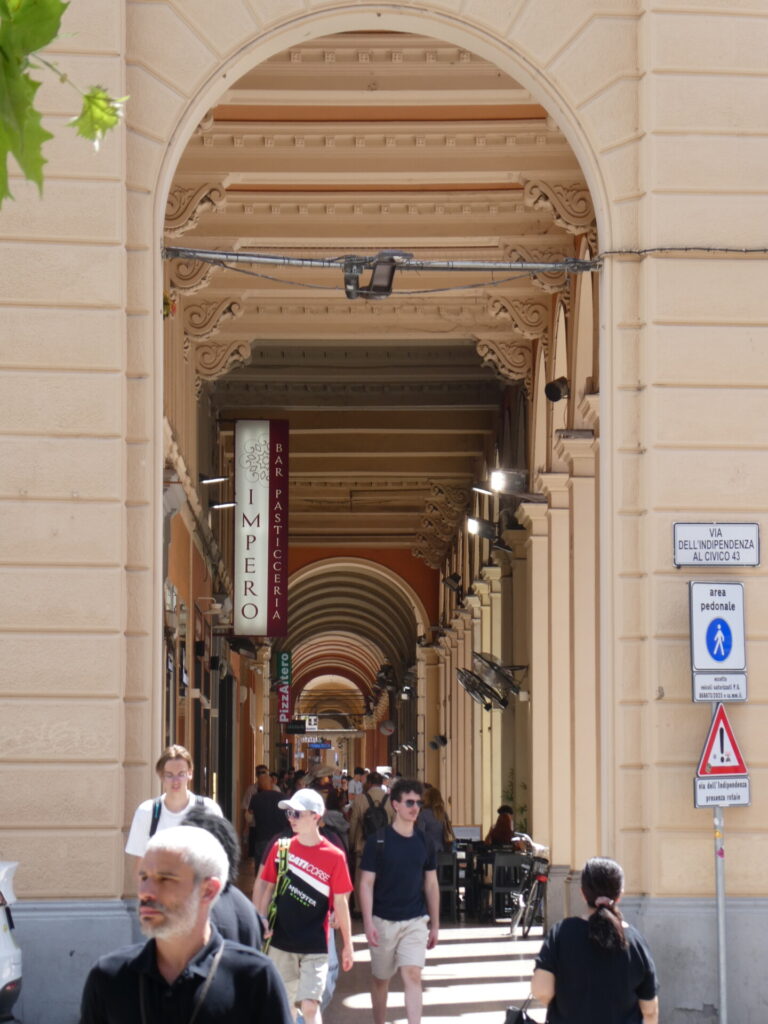
The porticos stretch for kilometres
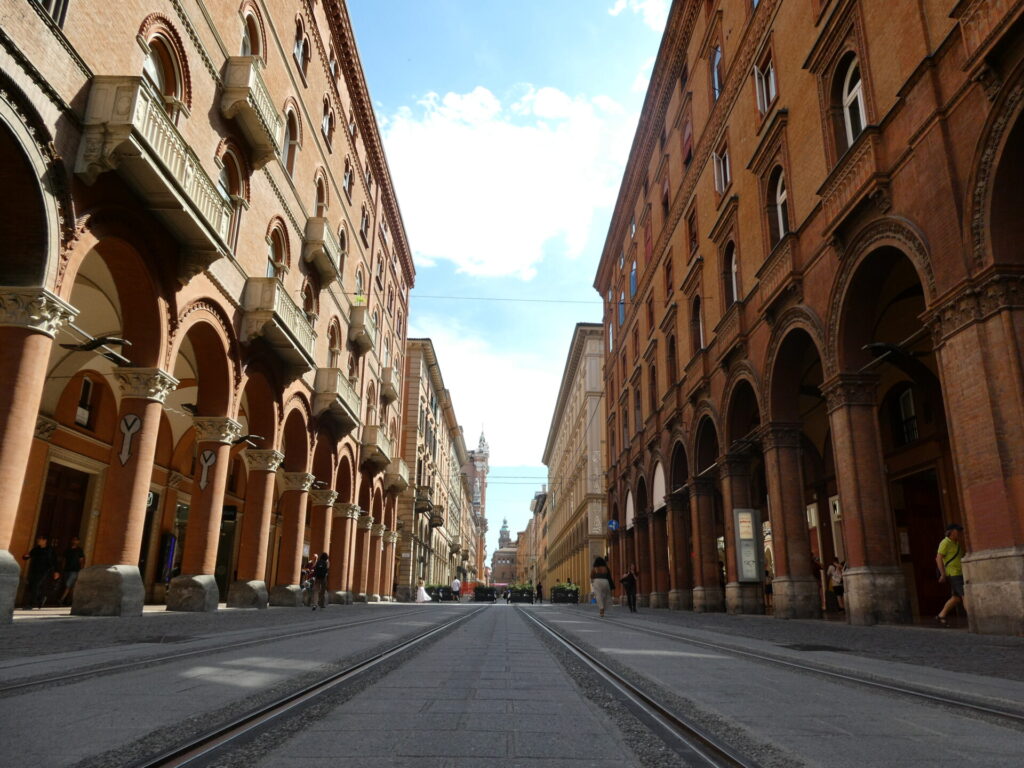
via Indipendzia
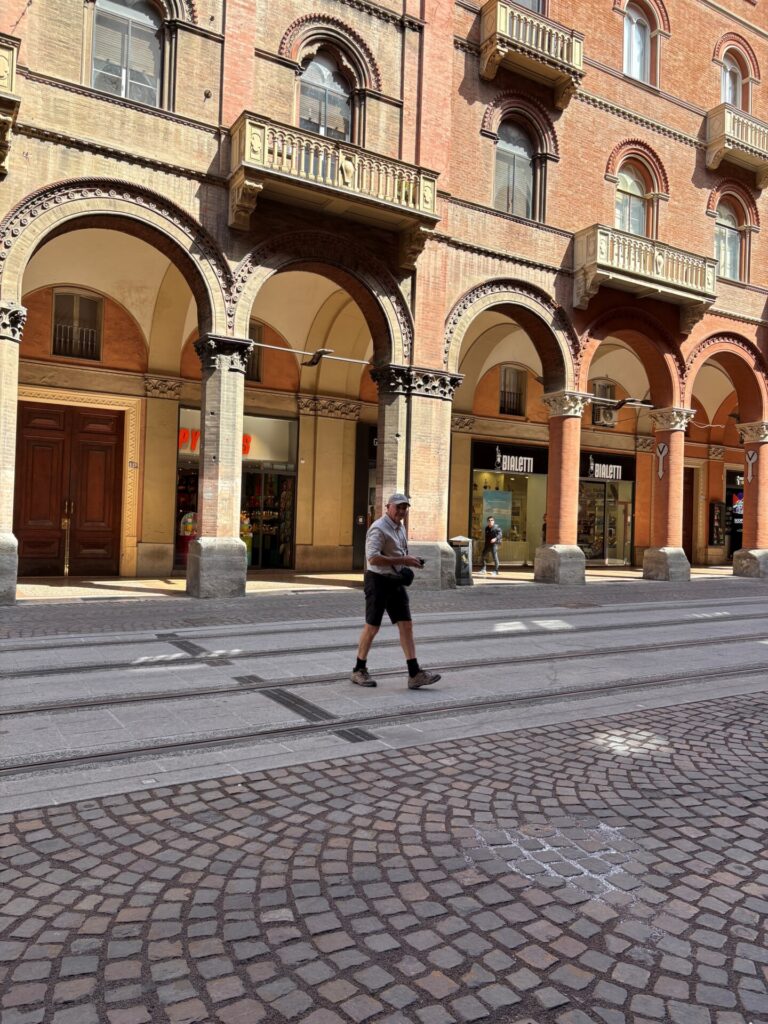
Continuing further along we visited some the main public buildings and piazzas.
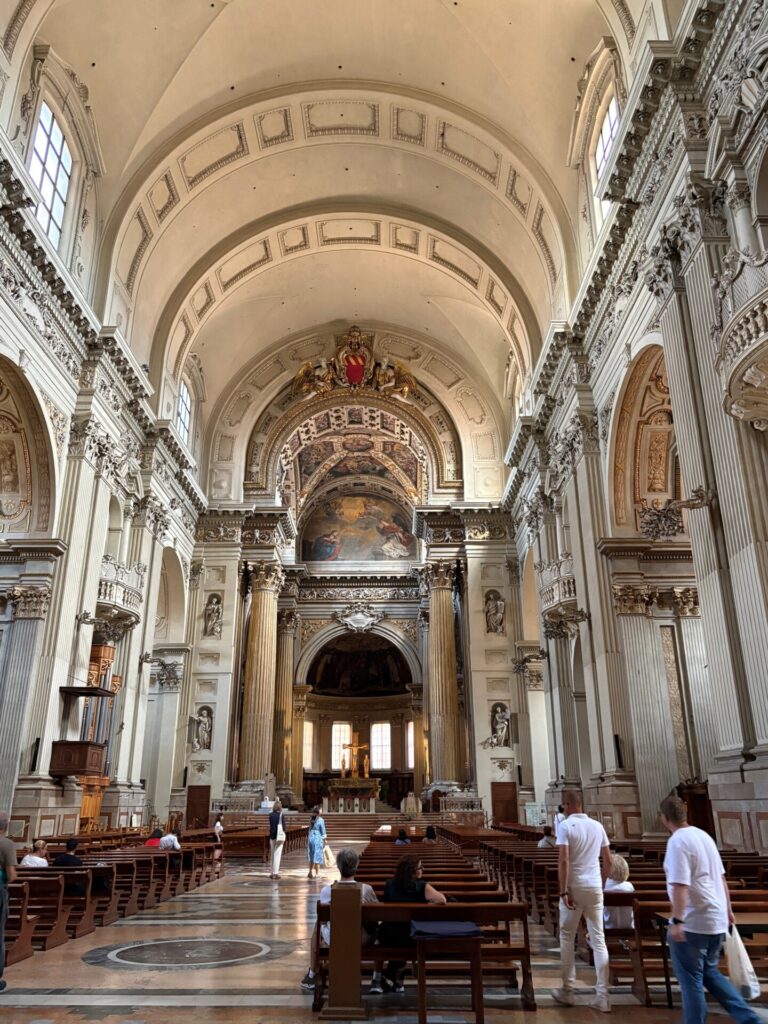
Church of St Peter
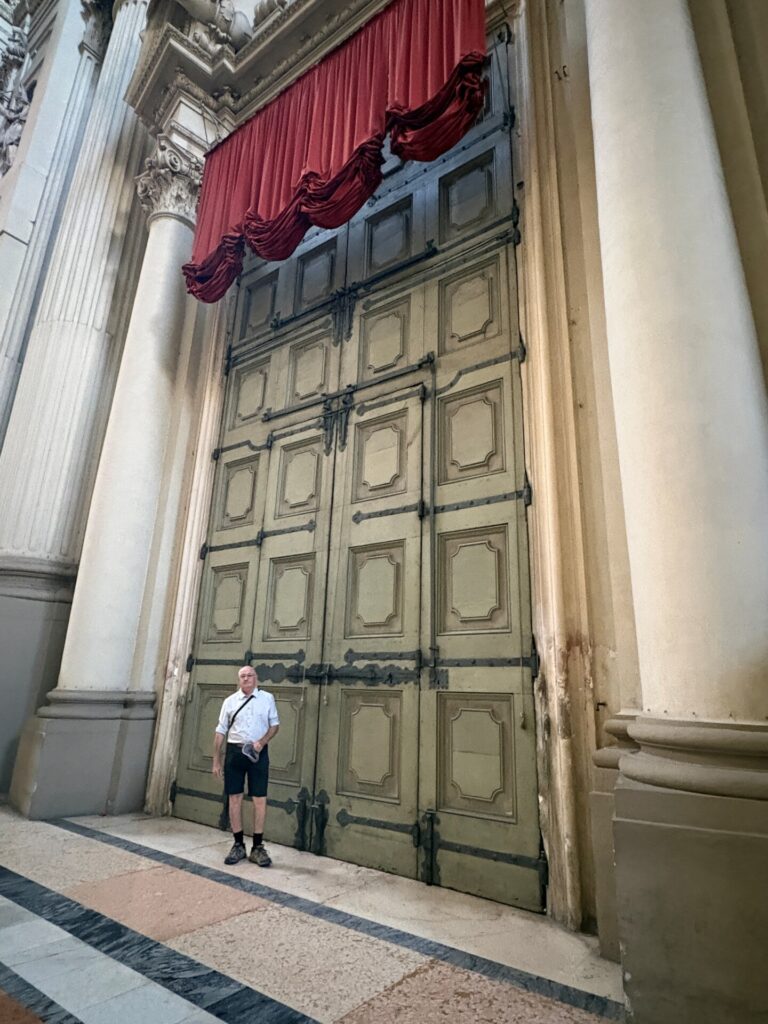
The enormous front door of St Peter’s
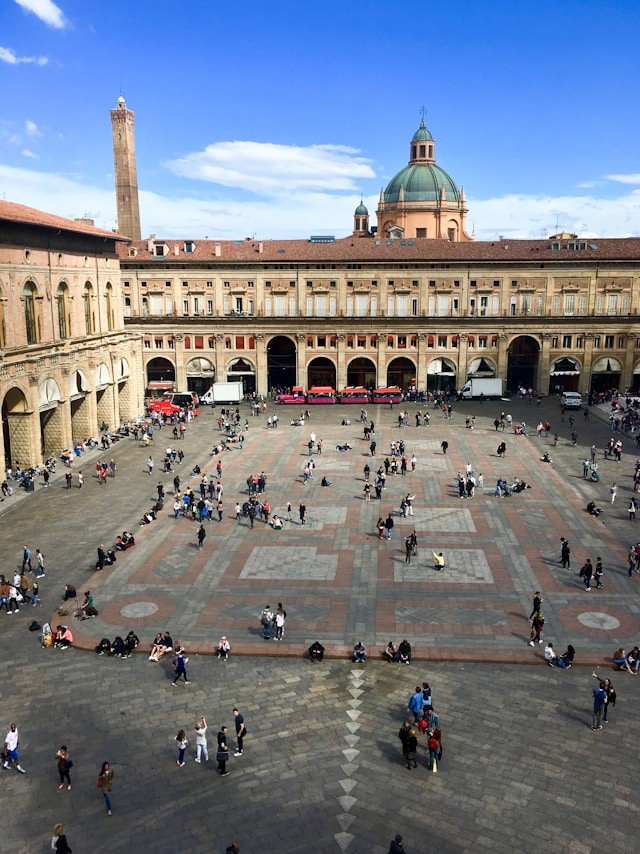
Piazza Maggoire
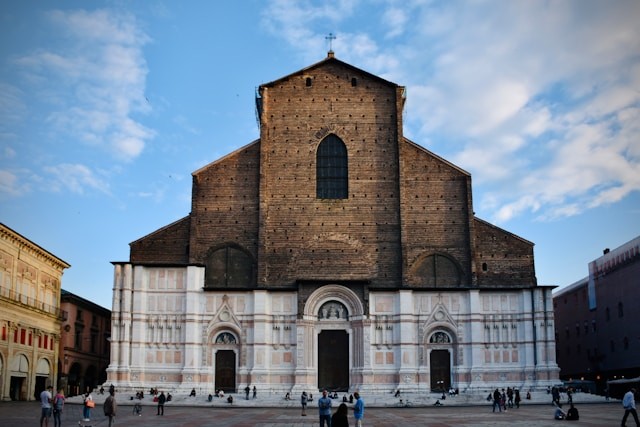
St Petronio – claimed by the locals as being the largest church in the world
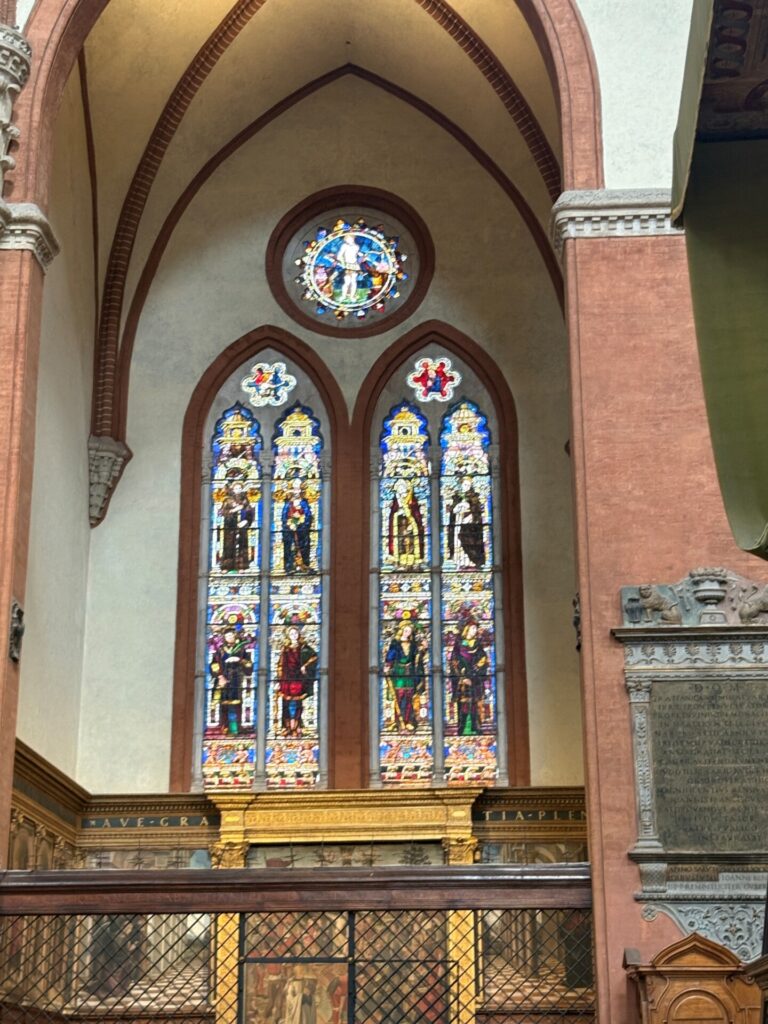
Inside the Basilica of St Petronio
Basilica di San Petronio is a symbol of controversy. Originally designed to be bigger than Saint Peter’s Basilica in Rome, it succeeded in annoying the Pope. Not before the bottom half of the cathedral was laid out in marble along a North South meridian when Catholic convention demanded an East West axis. Now they had gone too far, and Pope Pius IV in the 1560s shut the project down by building another cathedral 12 METRES away, the Archiginnasio, thus consuming all of the available building stone, bricks and labour. That is close by when considering the dimensions of the Basilica di San Petronio are 132m by 60m with a 45m high vault and seating for 28,000 people. But by 1655 the local Bolognese had mustered up enough red brick to complete the top half of the Basilica. Which was a great opportunity to poke the bear, and see what the pope would do. Firstly the 4m high bronze statue of Pope Julius II was installed by Michelangelo over the main doorway, and was then misplaced and lost!! Then an astronomer called Casini won permission from the local bishops to build a sundial. Sounds pretty simple except his sundial is 67m long and it is “inside” the basilica, where the sun does not shine!! The way it works is that there is a “pinhole” in the vault allowing the noon light to intersect the meridian and aid with significant measurement of sun-earth elliptical rotation. The advantages of science were lost on successive popes and it was not until 1954 that the Basilica of San Petronio was consecrated by the Vatican – 564 years after construction began – although the pope was still annoyed and had one of his minions do that.
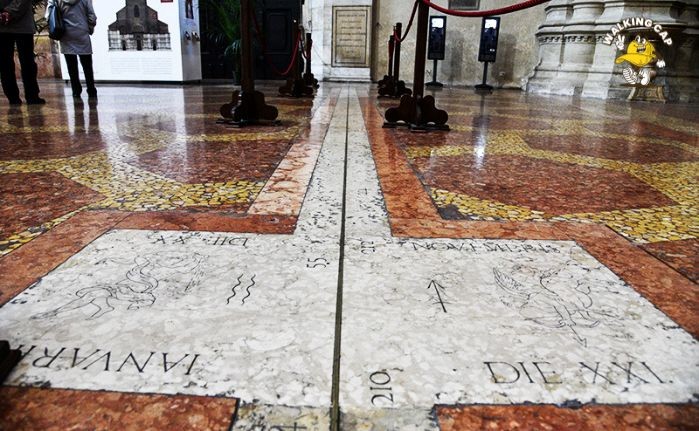
The sun dial
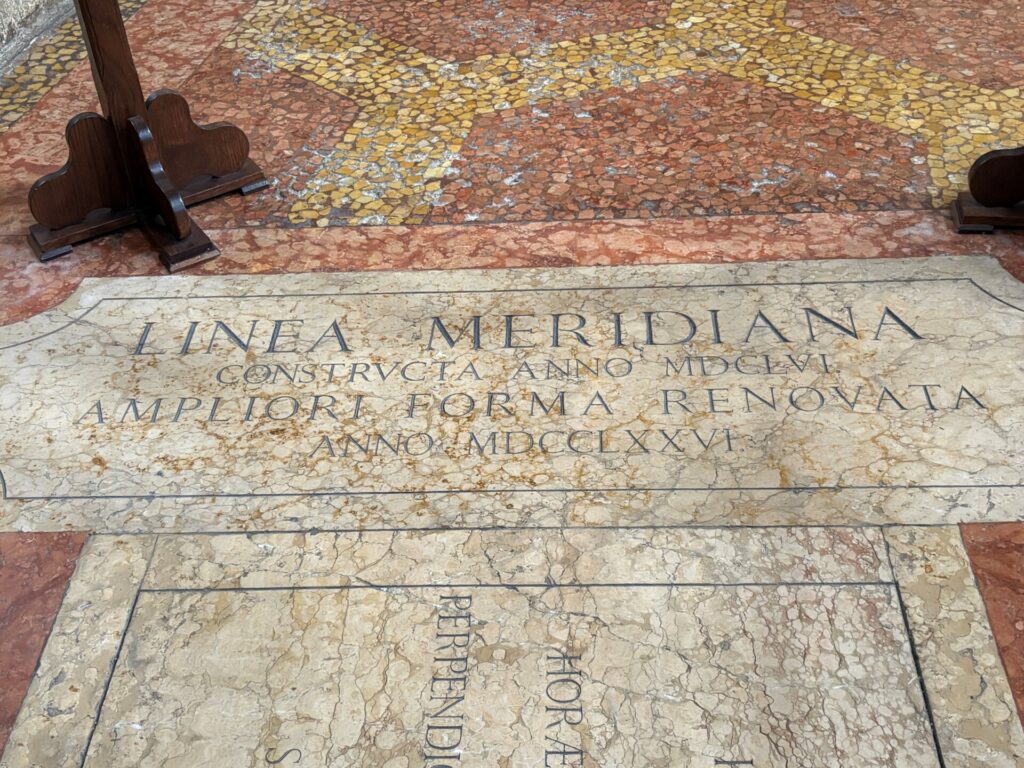
The sun dial
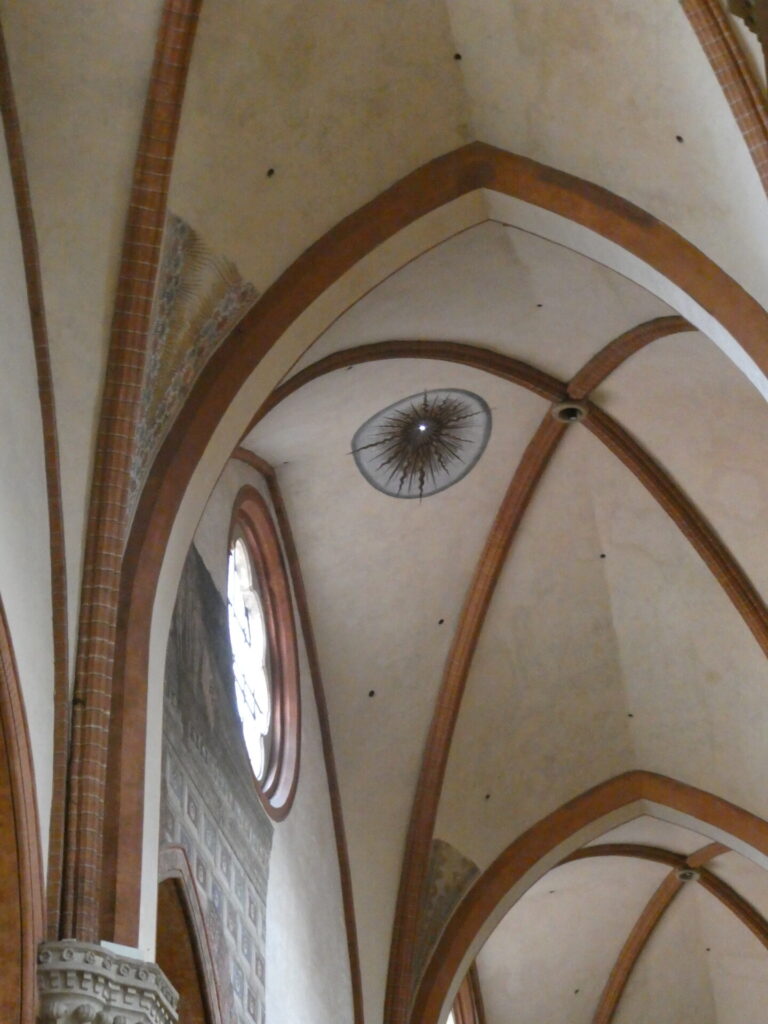
The pin hole in the roof for the sun dial
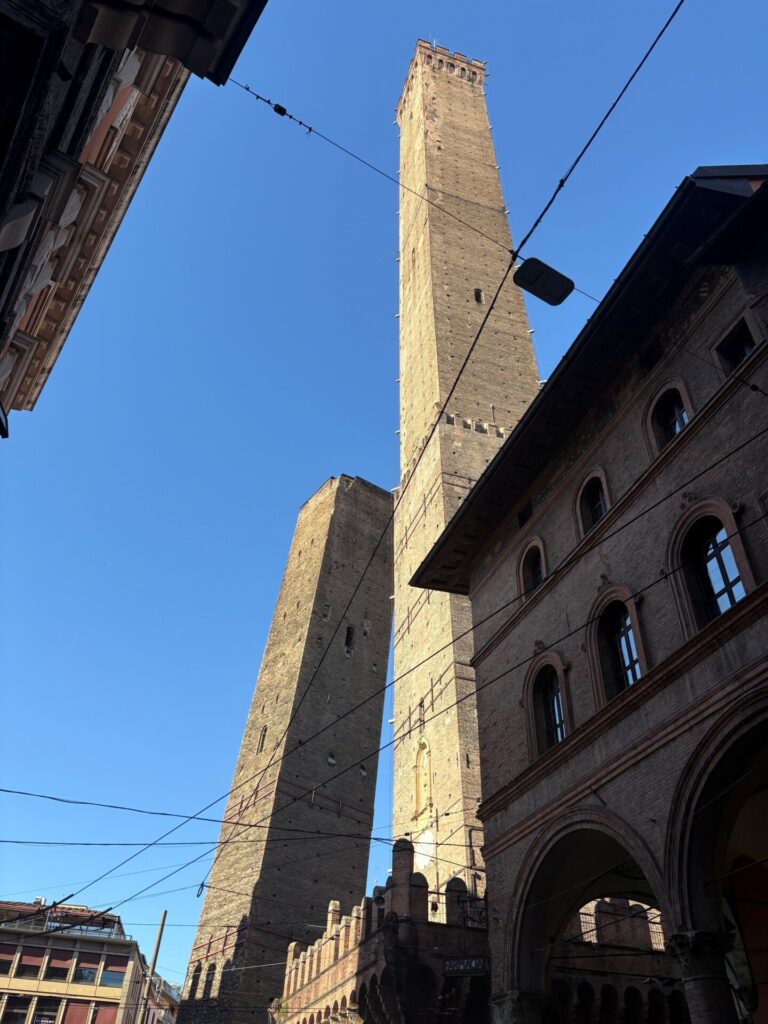
Torre degli Asinelli and Torre Garisenda
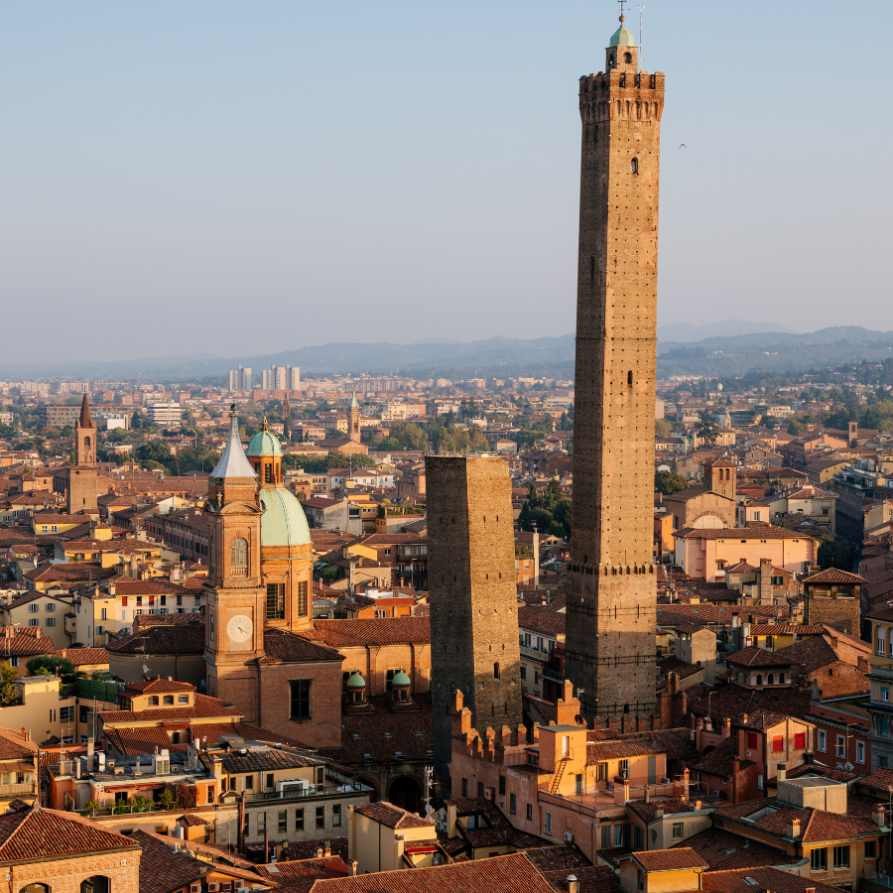
An aerial view
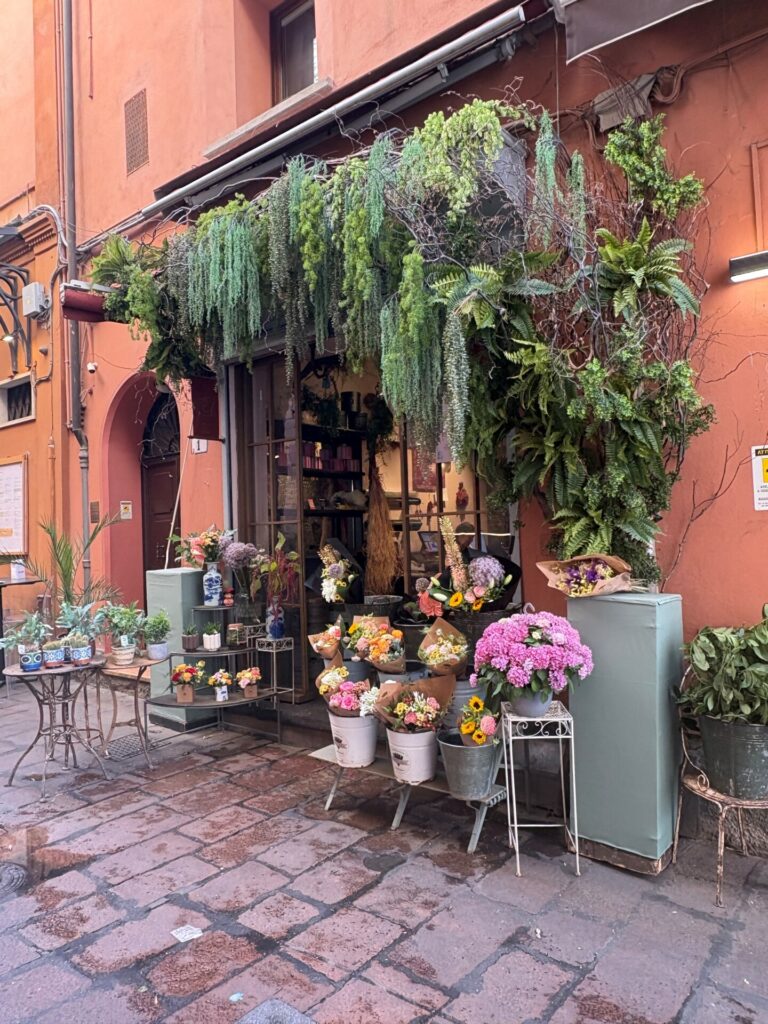
Mercato di Mezzo
Leave a Reply