
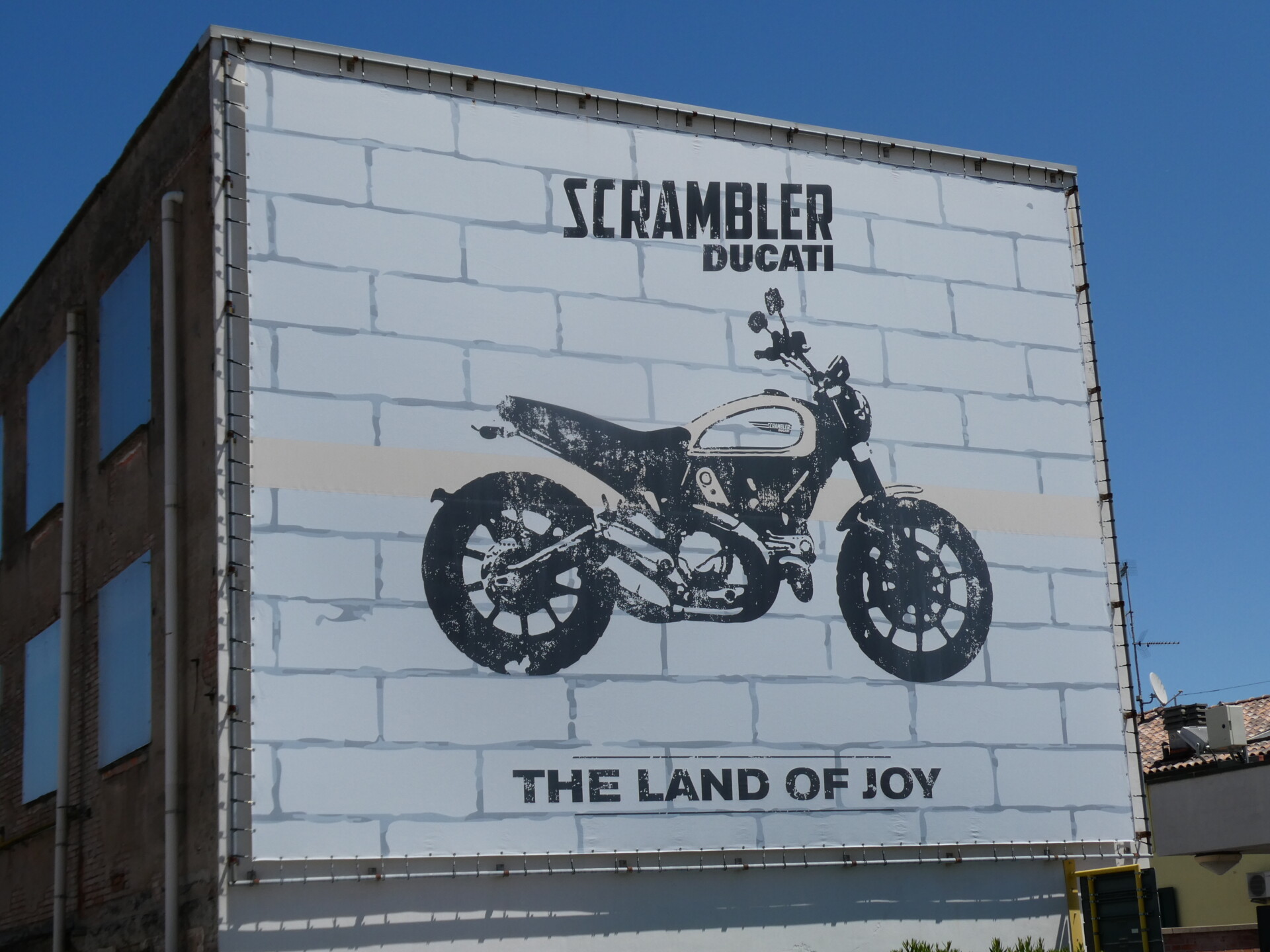
Ducati
Thursday 11th June 2026
Today was Ducati Day. After making our plans in Australia many months ago to visit Bologna as well as the Ducati factory and museum, I then learned that they would be closed to undertake some renovations and would not to re-opening until July. We were very disappointed, however decided not to change our travel plans and fill up our time with other sights in the area. So, we were delighted yesterday to discover that we could get some tickets to the museum. I booked them immediately as they only had the 9am slot available. We caught a taxi out there (train and bus strike today for 24 hours) and checked in at the visitor centre and only to be asked if we would also like to take the factory tour – Geoff was over the moon. Just in case anyone is in any doubt about the Ducati obsession, let me tell you I cannot count on one hand how many Ducati motorbikes Geoff owns!! I now think I should turn this post over to Geoff to complete as I don’t think I could do it justice. Mind you I did really enjoy the factory tour.
We knew we had arrived when even the street was named Borgo Panigale.
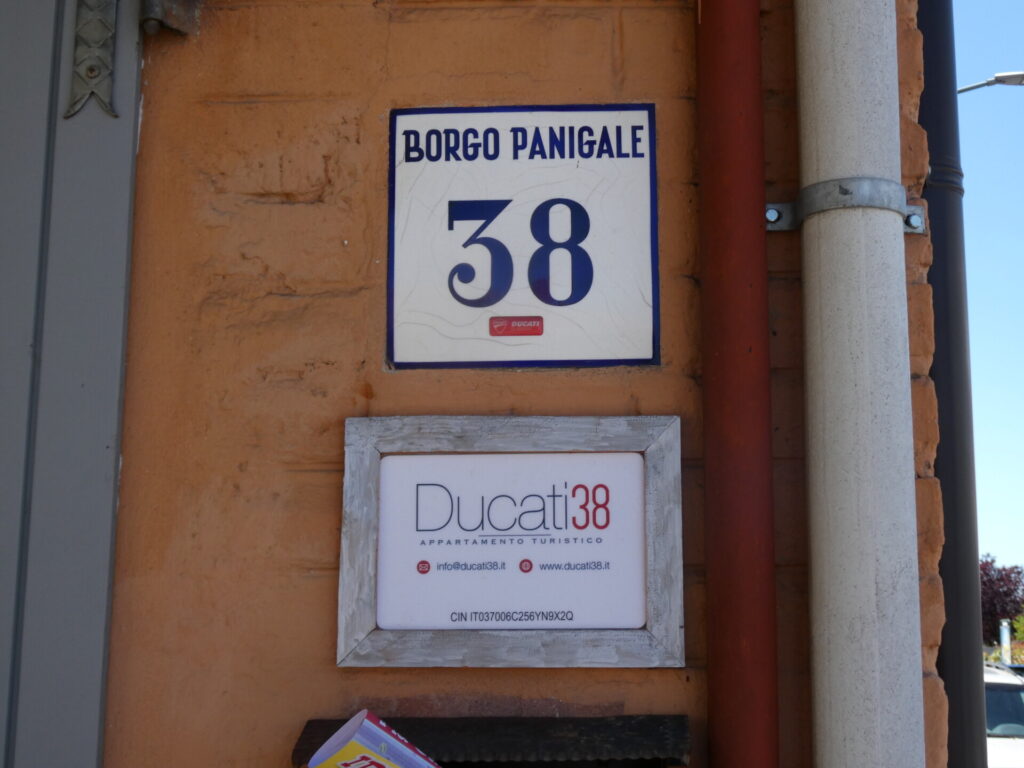
The street to live in – outside the factory door
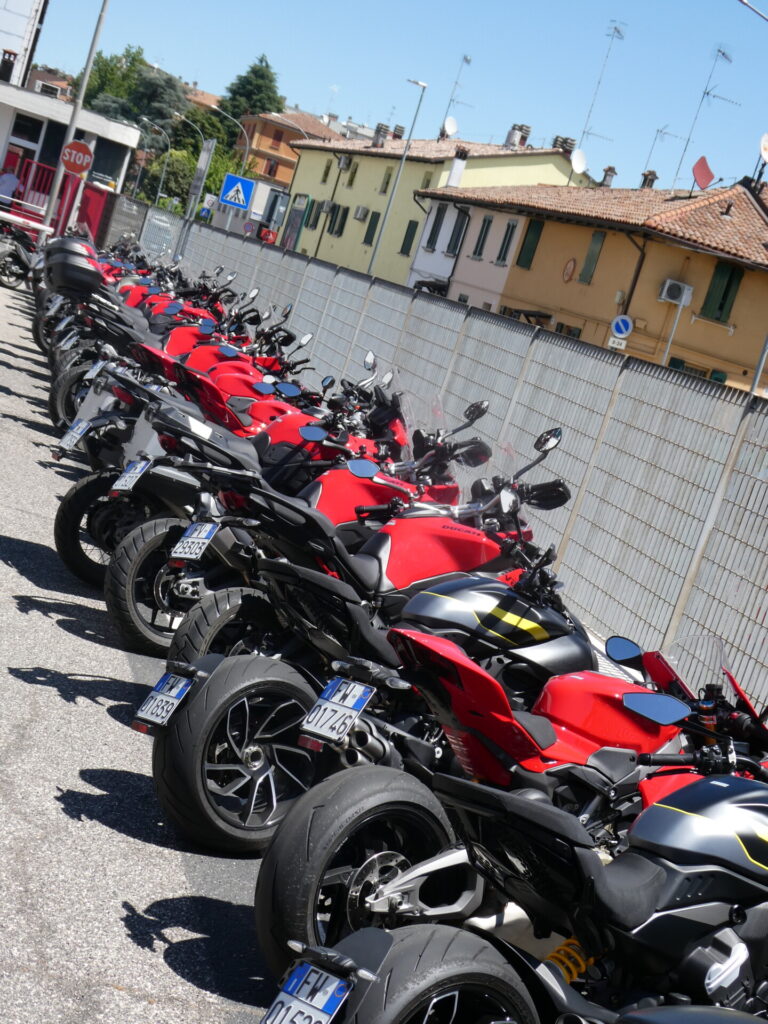
Ducati commuters parked up at the factory – the line goes just as far in the other direction
The Panigale model has been manufactured since 2012 and this was our chance to see how it is done. About 60,000 motorcycles are produced at the facility and we were in a walking tour group of a dozen Australian, New Zealanders and Germans. Our guide spoke excellent English and used a microphone to communicate via wireless to our earbuds. 1600 people work at the factory and we watched the three main assembly lines completing the classic engine builds (single, V2 and V4) . The twin cylinder model is still based on the original racers from the early 1970 Imola winners. The Monster motorcycle has been a successful adopter of this engine and is now the highest selling model in Ducati history. It exploits the aesthetics of the trellis frame developed by Ducati in the late 1970s allowing the engine to be a stressed member and cuts down on weight.
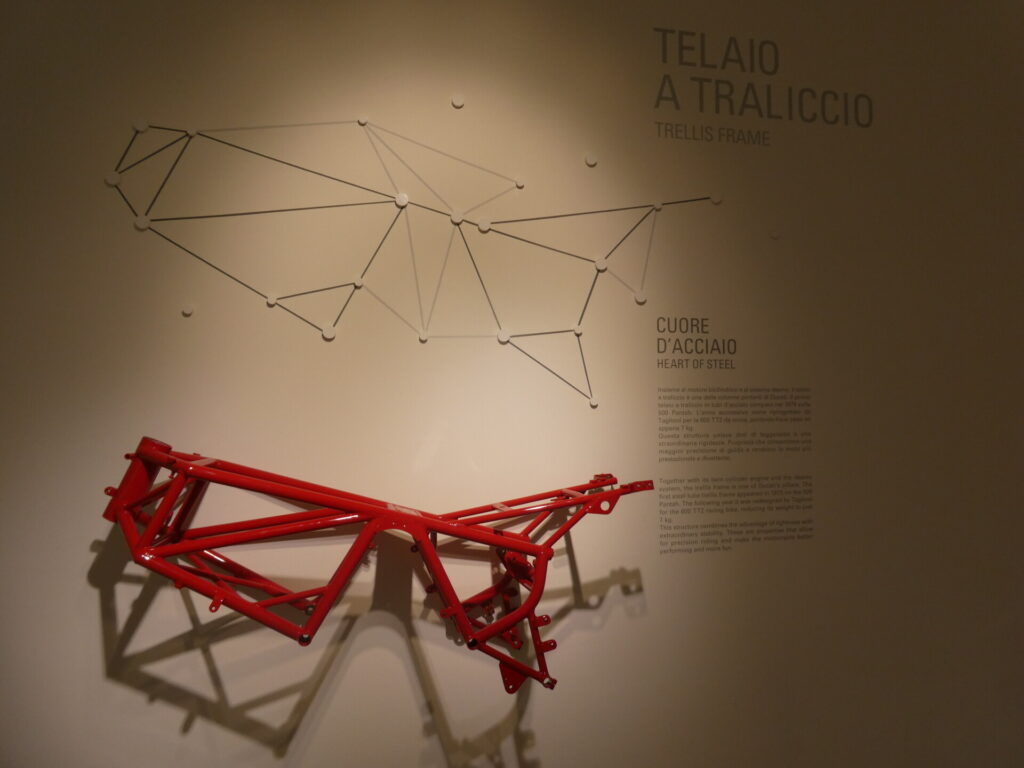
Trellis Frame – making triangles look good
The newer Diavel and Multistrada v4 (I have a v2) designs were rolling off the production line nearby with a robot trolley “Wallee” picking up the precious cargo for transport to the chassis area for “marrying” with the frame.
No pictures allowed in the factory – sorry.
The factory was flattened in 1944 free of charge. The Allies bombed it when the Ducati brothers were press ganged by the Fascists (Mussolini) to make electronic equipment for the Nazis.
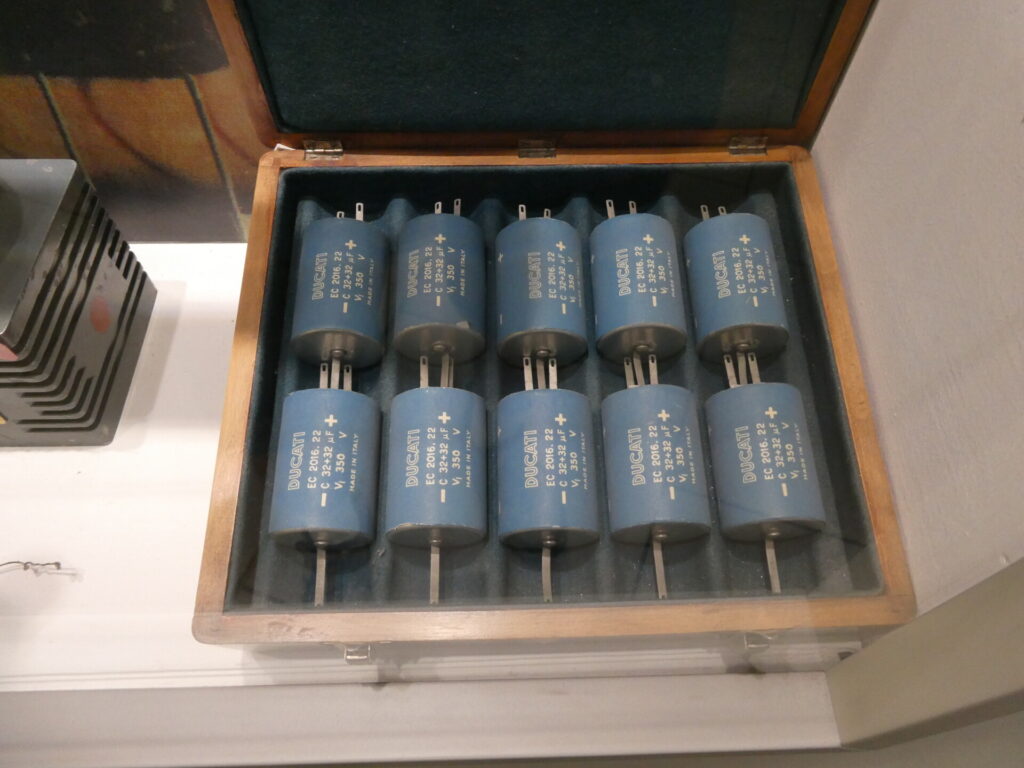
Earlier Ducati Electronica capacitors
So after the war they decided to make something different, a 50cc single cylinder motor that could bolt to a bicycle. The Cucciolo (small pup) was very popular during the rebuilding of Europe as people travelled short distances over bumpy roads.
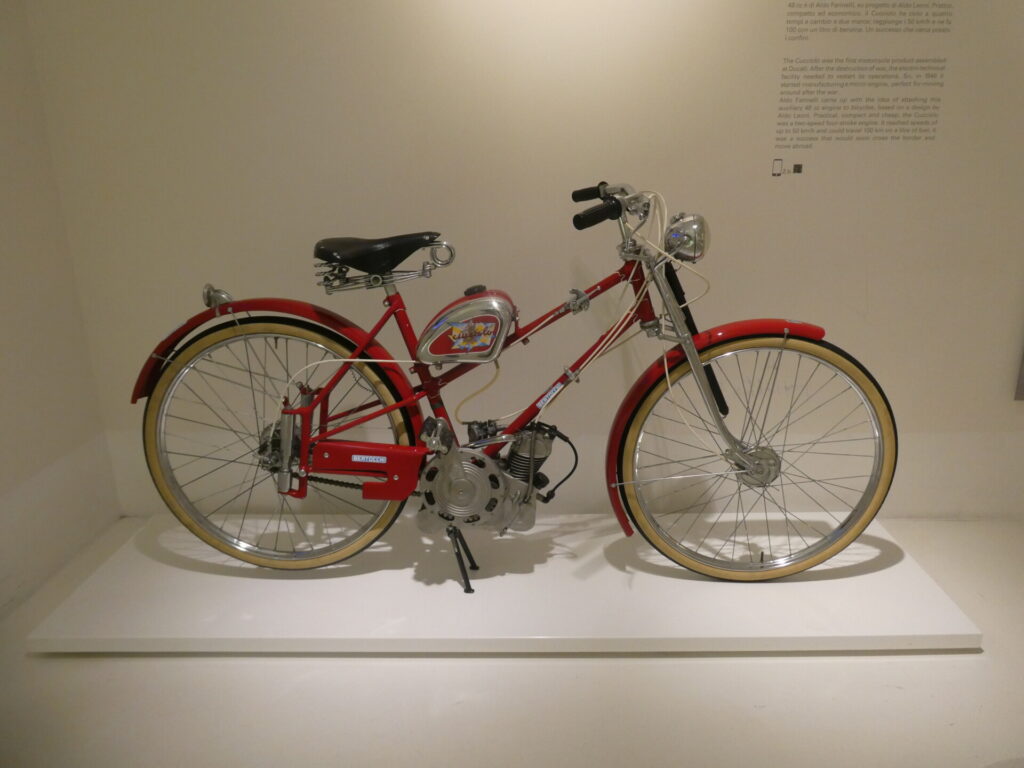
Cucciolo 50cc- just add your own bicycle Andiamo (let’s go)
After a few years they added a frame and later a battery, although it was still a kick start.
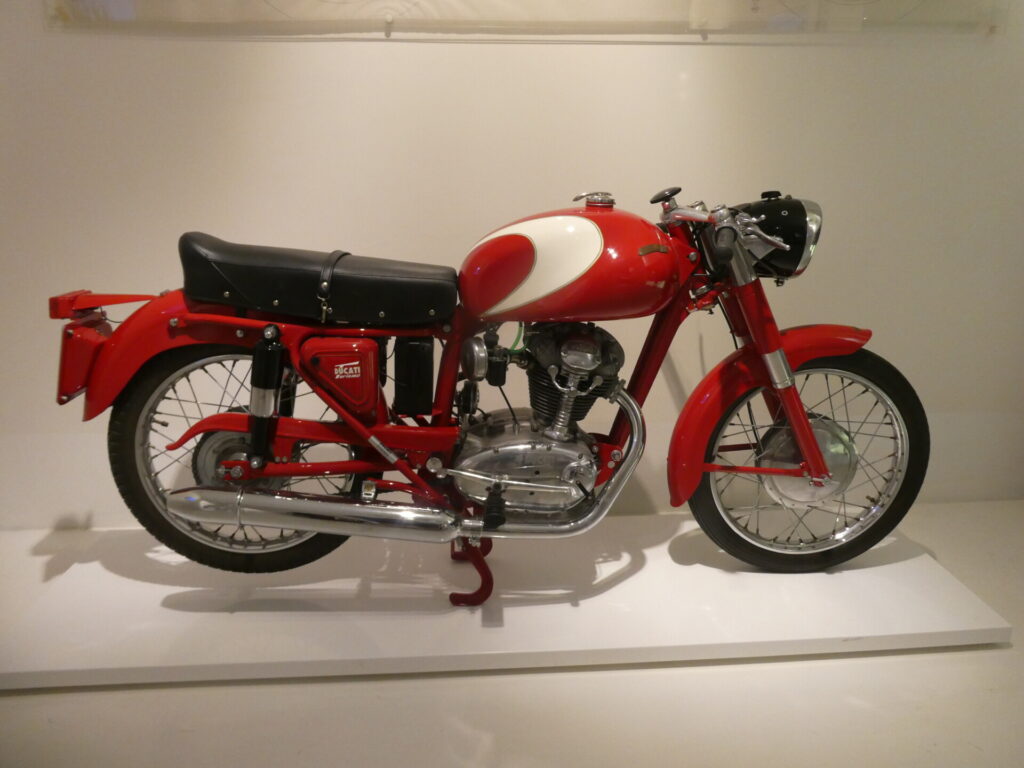
Their big break came in the 1970s when motorcycle racers including GOAT Agostini and others boycotted the British Isle of Man TT, because of the number of fatalities. It was also cancelled in June 2026 for the same reason, some things don’t change. What some people saw as a problem became an opportunity in 1972. An Italian promoter put up one of Europe’s largest prize pools for an inaugural 200 mile race at Imola, 50 km from the Ducati factory door.
The chief design engineer, Fabio Taglioni seized the challenge and pushed development of an L-twin 750cc motor, it was an untested racing design that replaced the valve springs with reciprocating cams (desmodromic timing which came to define the late Desmos).
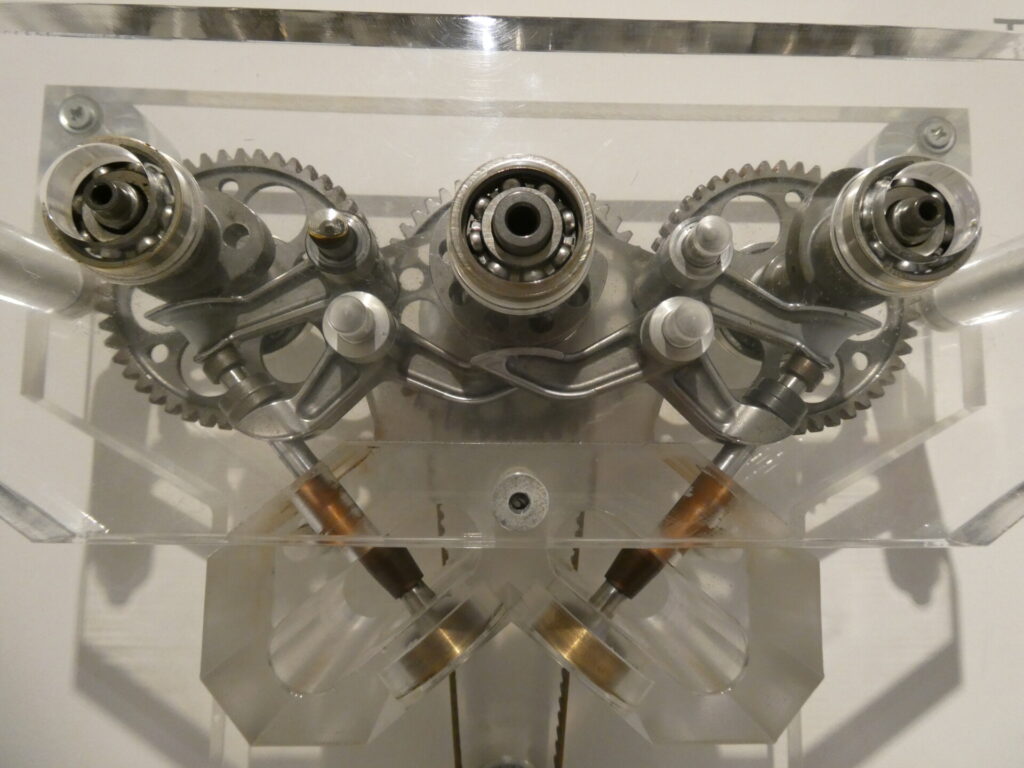
Single cylinder desmo inlet and exhaust valves
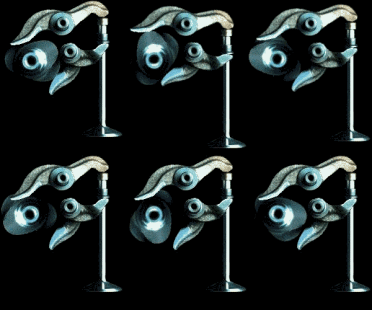
Single cylinder Desmo valve
Concerns over weight were addressed by removing the steel fuel tank and gauge to replace them with a single fibreglass tank with a transparent vertical strip to measure the fuel level. I have one at home on a recent “Imola tank” that works when the bike is vertical!!). Fabio was concerned about ground clearance and knowing that the track ran counter clockwise with severe left handers, he moved the exhaust system to the right.
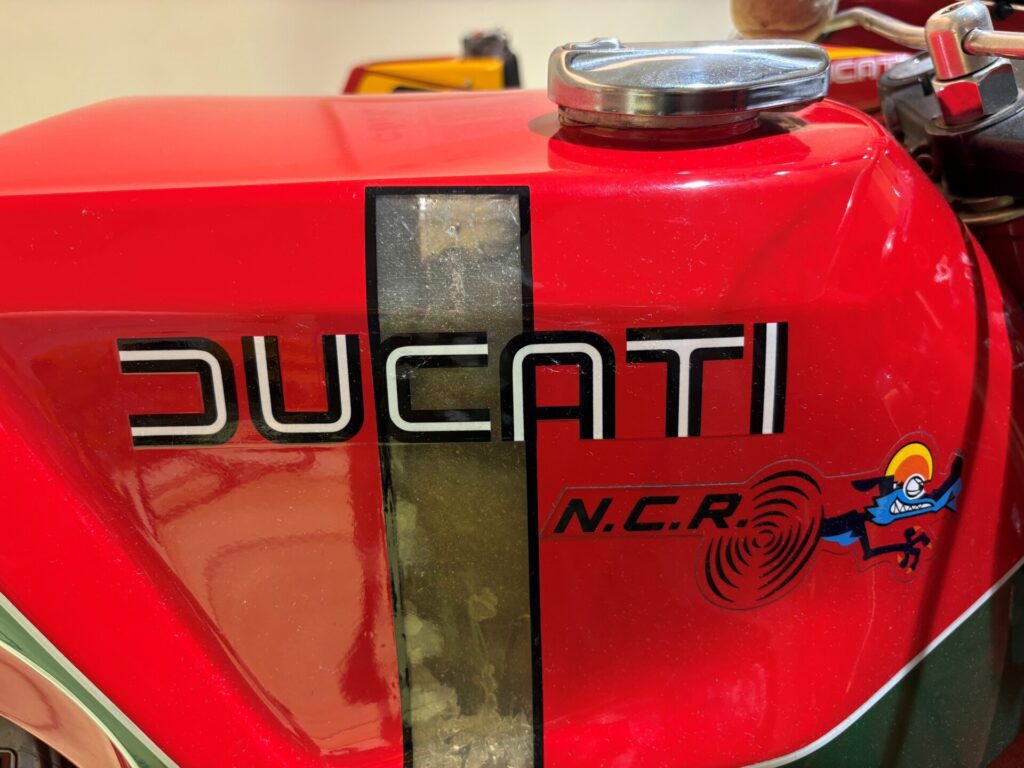
Imola tank fuel gauge if it looks half empty just lean it over, amazing it is full!!
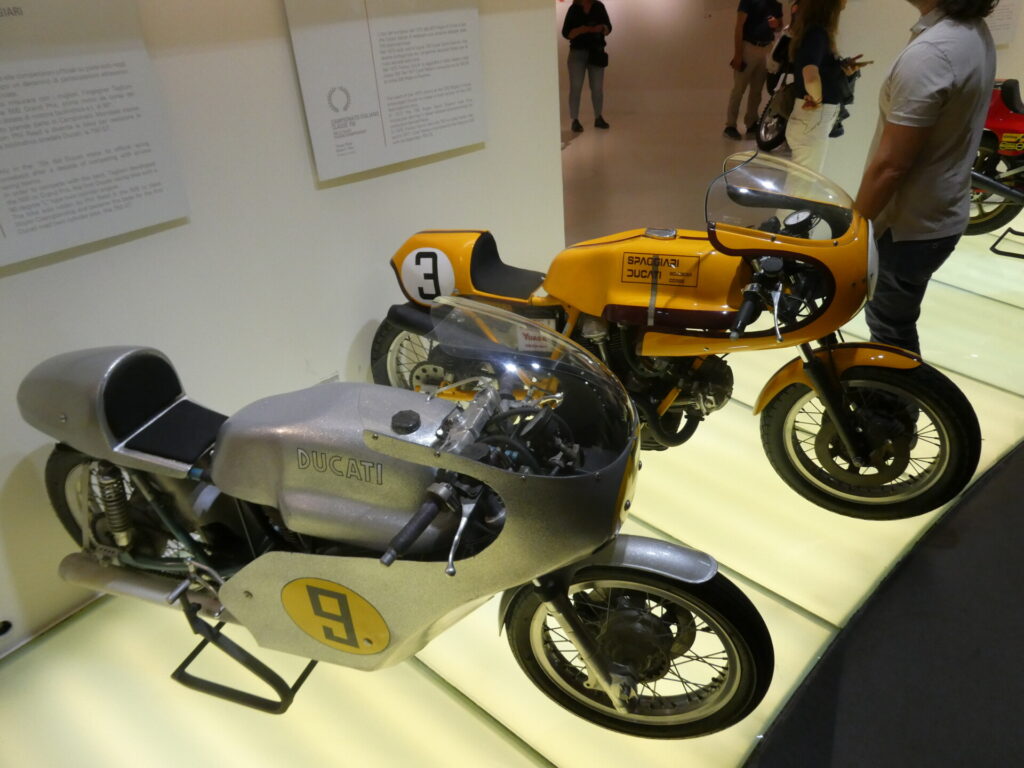
Full fairing 1970’s Ducati 750 Twin cylinders with right hand exhausts for left hand corners and disk brakes up front (limited use)
The riders had no excuses and they responded with an emphatic first and second placing, Paul Smart and Bruno Spaggiari sharing the honours for Ducati. Agostini never got past third position and had to retire from the race when his MV Augusta failed mechanically.
The 1974 Imola race attracted 140,000 spectators and by that time Ducati was a household name.
And what about the future?
Skill training and selection of ability starts in secondary school. This is something Australian industry could learn from. Successful applicants are offered a two year split time (half school half factory) training programme shared with Lamborgini (sister company owned by VW just up the road). That makes it hard for any student to choose between!! Anyway the best performers join the respective companies and with a strong “hands on” experience, contribute to high tech developments.
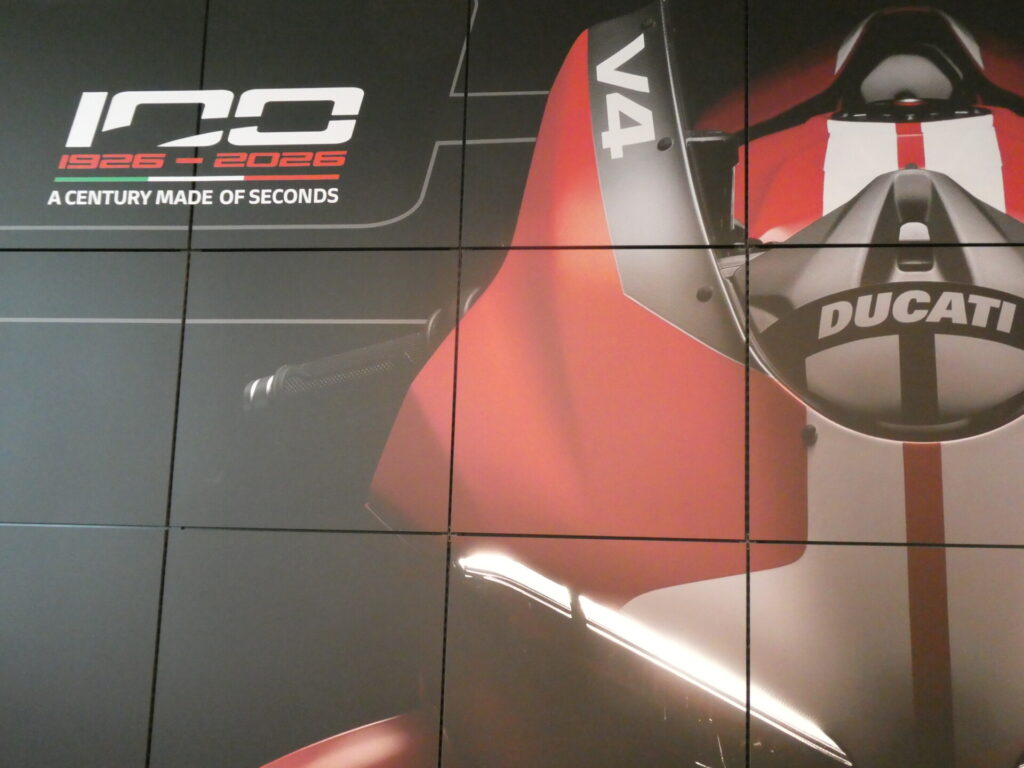
After 100 years Ducati has a lot to celebrate and look forward to.
Comments
-
Dale
June 22, 2026
thanks guys. great read. ‘short trips over bumpy roads’ is still the likely norm for dukes in Oz..
-


Tony
June 15, 2026
Seventh Heaven, Geoff!